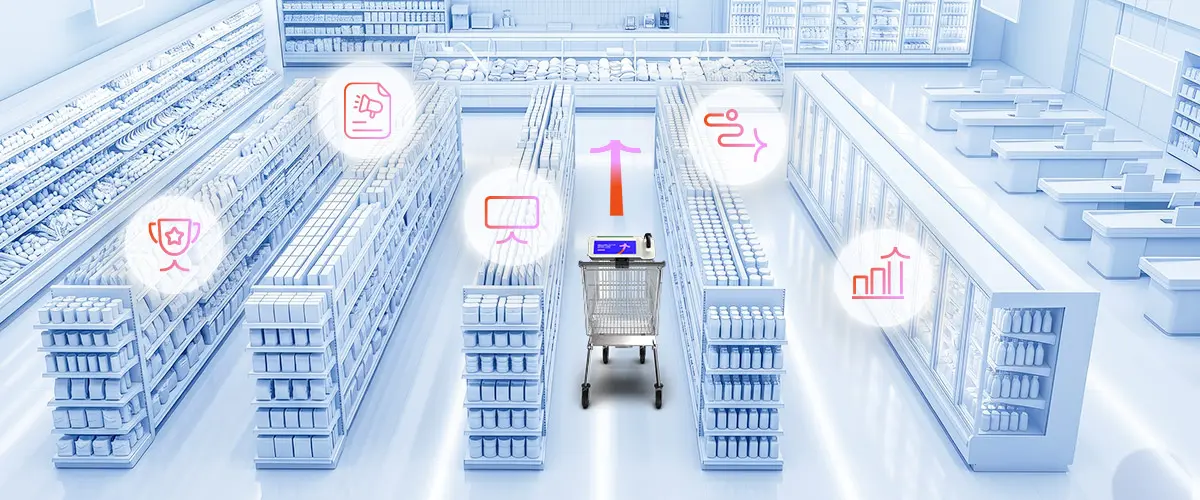

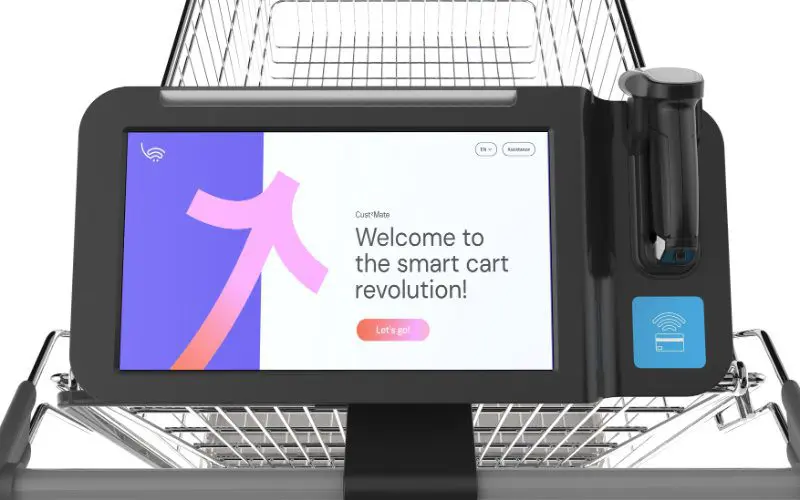
Smart carts are emerging as a practical self-checkout alternative for grocery retailers that want faster shopping without increasing shrink risk. Instead of asking shoppers to scan everything at a fixed kiosk at the end of the trip, smart carts move scanning, basket visibility, payment and validation into the shopping journey itself. For retailers, this creates a better balance between customer convenience, operational efficiency, loss prevention and in-store data visibility.
Across continents, more retailers are adopting smart carts to lower their labor costs without driving up shrink.
Instacart and Associated Wholesale Growers (AWG) shared Monday (March 25) that they have expanded their partnership to offer more direct access to the former’s eCommerce and same-day delivery solutions across the latter’s member retailers. The offerings include Instacart’s artificial intelligence-powered Caper Cart self-checkout carts, bringing the collaboration to 2,300 more AWG member retailer locations.
Meanwhile, A2Z Smart Technologies Corp. announced Friday (March 22) the first deployment of its Cust2Mate 3.0 smart carts, scheduled to go live in April in Israel’s Yochananof supermarket chain, with France’s Monoprix and the United States’ Morton Williams to follow.
Cust2Mate CEO Guy Mordoch told PYMNTS last year that the company sees a 30% increase in average basket size when shoppers use smart carts over regular shopping carts.
As retailers look to unify their digital and brick-and-mortar presences, smart carts can help bridge the gap. For instance, these carts can gather data on customer behavior, such as purchasing patterns, popular products and peak shopping times, much as eCommerce channels can track engagement. Retailers can analyze this data to gain insights into customer preferences and optimize their merchandising strategies, pricing and inventory management.
Moreover, by understanding individual shopping habits and preferences, retailers can deliver targeted marketing campaigns and personalized promotions to customers across digital and physical channels. This tailored approach can increase customer engagement, loyalty and sales.
Plus, smart carts streamline the shopping process by enabling customers to scan items as they shop, reducing the need for traditional checkout counters while mitigating some of the risks posed by other methods of self-checkout. Specifically, smart carts equipped with sensors and security features can help retailers combat theft and shrinkage while still reaping the operational benefits of self-checkout.
According to Caper, its cart has “anti-theft” features, equipped with “tools to help prevent shrink.” Plus, Cust2Mate claims to work against “the growing shrinkage epidemic” with features such as “computer vision, RFID and AI anomaly behavior detection” in addition to the standard-issue scanning and weight sensor capabilities.
These moves to expand smart cart adoption come as retailers are forced to pivot away from traditional self-checkout kiosks amid widespread losses.
Still, retailers see a strong need for self-checkout solutions. PYMNTS Intelligence research from 2022 found that 60% of U.S. retailers saw self-service kiosks as being key to shopper loyalty, and 40% said the same about the ability to scan products and pay without standing in line.
Many consumers also seek out these kinds of in-store digital technologies, such that these kinds of digital upgrades can improve their shopping experience. PYMNTS Intelligence’s study “2024 Global Digital Shopping Index: The Rise of the Click-and-Mortar™ Shopper and What It Means for Merchants” found that 25% of consumers are digitally assisted in-store shoppers, using technology to improve their brick-and-mortar experiences.
FAQ on smart carts
What is a self-checkout alternative?
A self-checkout alternative is a technology or store model that allows shoppers to complete more of the checkout process without relying only on a traditional staffed checkout lane or fixed self-checkout kiosk.
How are smart carts different from self-checkout kiosks?
Self-checkout kiosks move the scanning and payment process to a fixed point at the end of the trip. Smart carts bring scanning, basket visibility, validation and payment into the shopping journey itself.
Can smart carts help reduce shrink?
Smart carts can help reduce shrink risk by improving item visibility, supporting basket validation, using sensors or computer vision, and flagging unusual activity for staff review. They should be positioned as a loss-prevention support tool, not as a complete replacement for store security.
Why are retailers adopting smart carts?
Retailers are adopting smart carts to improve checkout flow, reduce reliance on fixed checkout areas, support digital engagement in the aisle, gain better shopper data and create new in-store retail media opportunities.
Do smart carts replace cashiers?
Smart carts do not have to replace cashiers. In many grocery environments, they can complement staffed checkout, self-checkout and customer service teams by shifting routine scanning and payment tasks into the shopping journey.
How do smart carts improve the shopper experience?
Smart carts allow shoppers to track their basket, scan or validate items while shopping, receive relevant information or offers, and complete payment with less waiting at the end of the trip.
What should grocery retailers check before deploying smart carts?
Retailers should evaluate shopper usability, POS integration, payment flow, shrink prevention features, staff training, cart maintenance, data reporting, privacy requirements and the ability to scale the solution across stores.
Where does Cust2Mate fit into smart cart adoption?
Cust2Mate provides a smart cart platform for grocery retailers, combining scan-as-you-shop, on-cart payment, shopper engagement, retail media and data-driven store insights.