
Your Customers Are Becoming Strangers. Close the gap between guessing and real shopper insight.
Walk your store on a busy afternoon.
You probably recognise a lot of the faces. You know when traffic spikes, which aisles clog up, which promotions move stock. You might even know a few regulars by name.
But if you are honest, you do not really know them. Your customers are still mostly numbers on a report.
You know how many people came in. You know what left through the checkout. You don’t really know how they got from one to the other, or why they chose you this week and someone else next week.
That gap between what you feel you know and what your systems actually know is why your regulars can still feel like strangers.
The problem is that your tools can’t see what really happens in your aisles.
How The Relationship Drifted Away
This did not happen because retailers were simply busy optimising other things.
For years, the focus was on all levers such as: location, price, assortment, promotions, supply chain. Customer “relationship” was there, but most of the data that could have supported it was scattered across systems.
Most retailers I speak with do not feel “data poor”. If anything, they feel overloaded.
The challenge is that much of what you have is end-of-line data. Useful for reporting. Less useful for understanding human behaviour.
Let us look at what your current systems actually tell you, and what they completely miss.
Your POS is very good at telling you how the story ends: What was sold, at what time, for what total. It can’t show you:
- What shoppers picked up, then quietly put back
- Where they got stuck, circled, or gave up
- Which offers they actually noticed
- How many times they almost added one more thing and changed their mind
Loyalty programs and apps help. You get partial identity, some visit history, some response to offers. But even strong programs only show you slices and averages.
Here’s what that looks like in practice:
You see: “Basket size down 4% in these stores”
Your customer experiences: “This trip is taking longer than it should. This used to be easier”
You see: “Traffic stable, conversion slightly lower”
Your customer experiences: “I’m guessing at my total the whole way through”
You see: “This promotion underperformed last year”
Your customer experiences: “These promotions have nothing to do with what I’m buying”
Same trip. Completely different view.
On paper, it looks like you know your customers well. In reality, you know the result of their decisions, not the reasons themselves. Everything between the entrance and checkout – the entire journey where your customers actually become customers, is essentially invisible.
If we want to talk seriously about owning customer relationships again, this is the gap we have to close. Not by drowning in more dashboards, but by finally understanding what actually happens during each trip.
So where do you close that gap? The answer is essentially in front of your eyes – it’s the one piece of equipment that’s already with them for the entire trip: the cart.
What Shoppers Are Quietly Telling You
Shoppers are usually very clear about what they want. They just do not always say it out loud.
When you look at the patterns, a few themes keep showing up:
They want checkout to be fast and predictable.
They want to know the running total and avoid last minute “bill shock”.
They do not mind offers, as long as those offers feel relevant and not random.
They want to feel that the store understands the way they shop and respects their time.
When those needs are not met, there is no big drama. No angry rant at the customer service desk. They simply adjust their behaviour.
A little less in the basket.
A few more trips to another chain.
A quiet shift of part of their spend to whoever makes life easier.
From a distance, that looks like “market dynamics”. Up close, it is often the outcome of experiences that feel clumsy, opaque or generic.
You cannot fix what you cannot see. If you do not understand the journey in the aisles, it is hard to design a store that makes people feel understood and in control.
From Anonymous Trip To Visible Journey
This is where we believe the cart itself becomes interesting.
The humble shopping cart is one of the only things that stays with the shopper for the entire journey. It is there when they start, when they navigate, when they decide, when they change their mind and when they finish.
Turn that cart into a smart cart and the trip stops being anonymous.
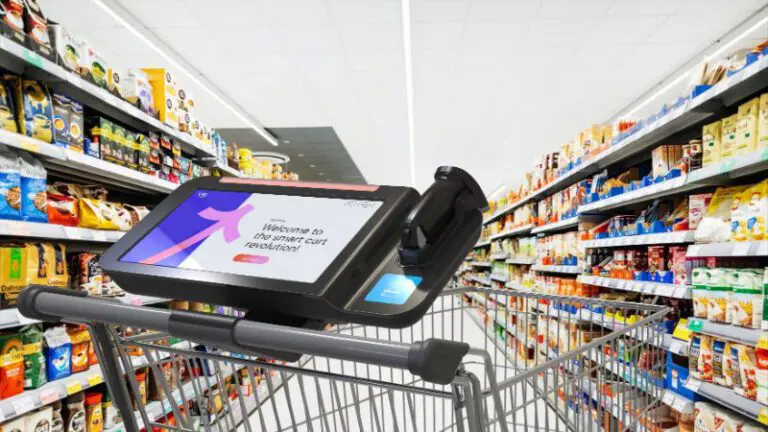
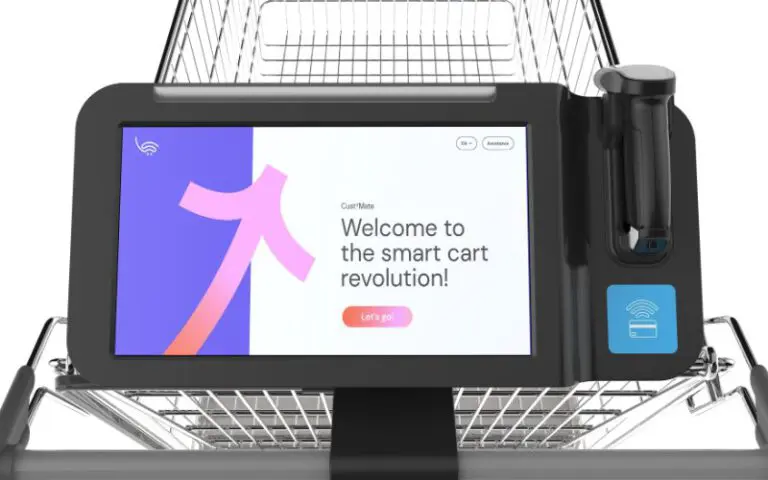
With a Cust2Mate smart cart, each item is scanned as it goes into the basket. The running total is clear on the screen. Relevant offers appear in context. Shoppers can connect loyalty if they want to, and suddenly what used to be a fuzzy walk through the aisles becomes a structured, consent-based journey.
For the shopper, the smart cart feels like a helpful companion. It keeps track of the bill, helps create a smooth flowing and frictionless shopping experience, highlights savings that actually relate to what they are buying and turns checkout into a quick confirmation rather than a stressful last step.
Now let’s look at it through your eyes, as a retailer. The plain, standard shopping cart transforms into a live data and engagement touchpoint. You move from “we know what was purchased” to “we understand how this trip unfolded”.
You can see paths.
You can see where baskets grow, where they stall and where they silently shrink.
You can see which offers genuinely add value and which ones just take up space.
And because smart carts can be rolled out across a large share of your fleet, this is not a niche view of a few early adopters. You can engage the majority of your shoppers through the carts and base decisions on patterns that reflect most segments, not just the tech-savvy few.
That is the kind of understanding no legacy system can give you inside the four walls of your store.
What Changes When Every Cart Is Smart
Once every trip can be captured as a journey, a few important things start to shift in practice.
First, you stop treating every visitor like the same generic “shopper”.
With journey-level data, and with the right permissions in place, you can start to recognise patterns. You can plan layout, assortment and promotions based on how people actually move and decide, not just on what passes through the till.
Because this runs at scale – across many stores and a high share of trips – those patterns become robust. You are not optimising around a small pilot sample. You are learning from how your customer base really behaves.
Second, you are able to give more of what shoppers actually want in real time.
Because the cart sees the basket in real time, it can surface value without slowing anyone down. The total updates with every scan. It can nudge when there is a saving that genuinely matters, flag multi-buy offers that fit what is already in the basket, or guide them to a product they could not find.
The experience stays self-directed. It just feels smarter, calmer and more transparent.
Third, relationships and revenue stop pulling in opposite directions.
When shoppers feel understood and in control, they tend to come back more and buy more. On your side, you can finally test ideas properly. You can see whether a new layout improves flow or just looks good in a presentation. Whether a promotion changes behaviour or simply burns margin. Whether fewer, better offers beat more, generic ones.
You’re no longer guessing.
And then there is the media layer.
A smart cart screen inside an active trip is much more than a digital poster. It is a highly contextual surface that reaches a real person, in a real moment of decision. With the Cust2Mate platform, you can set the rules, control who sees what, protect the shopper experience and still offer brands targeted, measurable visibility.
The important part is that you do it on your terms, with your data, inside your store.
Ownership Without Overstepping
Whenever we talk about using more in-store data, the concern about privacy and “creepiness” is valid and healthy.
Owning your customer relationships again does not mean tracking everything that moves or trying to squeeze value out of every second in the aisles.
For us, it means three things:
Being fully transparent about what you collect and why.
Giving shoppers a clear, immediate benefit when they choose to connect or share.
Building strong governance so your first-party data is treated with the respect it deserves.
If the smart cart is clearly positioned as a way to make their life easier, save money, reduce surprises and speed up the end of the trip, most shoppers see the value. Especially when they can opt in, opt out and control how “known” they want to be.
The store should be the place where that trade-off feels safest, not the place where it is hidden.
Where To Start If You Want Your Customers Back
If all of this feels like a big leap from where you are today, the path does not have to be complicated.
Start by choosing the journeys you care about most. For some chains it is the weekly family shop and the quick top-up visit. For others it is high-value loyalty members you are worried about losing. Either way, write those use cases down in plain language first so everyone is aligned on what you are trying to understand.
Then you bring Cust2Mate smart carts in with clear questions in mind. Not “what can the data do”, but “what do we actually want to learn about how people shop here, and what would we do differently if we knew”.
In the first phase, that might be a limited number of stores. The goal is to learn. The advantage of a cart-based retrofit platform is that once you are ready, you can scale quickly across many locations and many more shoppers, so the same experience and insight model reaches most of your customer base.
You connect the platform to your POS, loyalty and promotion engine so the data does not sit in a corner. You give shoppers a simple, high-value experience from day one: clear total, clean interface, a small number of genuinely relevant offers, easy loyalty connection.
And you make sure the insights get back to the people who can act on them. Store operations, store managers, category managers, marketing and operations all have something to gain from finally seeing how their decisions play out in real journeys, not just in the month-end reports.
From there, you iterate. You learn what shoppers appreciate, what feels like too much, what moves the needle and what simply looks clever on paper.
Your Store. Your Data. Your Relationships.
Retail has always been about relationships. The people who choose your stores every week, the habits they build, the trust they place in you to make everyday life a bit easier. Somewhere along the way, the way we measure performance drifted away from that simple idea.
We do not think that is inevitable.
A smart cart platform is not a gadget. It is a practical way to turn every trip into a better experience for shoppers and a deeper source of insight for you. When it runs at scale, across your stores and across most of your traffic, the data you get back is a real picture of how your customers live your brand, day in and day out. It helps you understand your shoppers’ journey in a way no traditional system ever could, and to do it inside the one place where the relationship actually happens: your store.
At Cust2Mate, that’s really the point. We want to help retailers stop treating their own customers like strangers and start seeing them again, with clarity, respect and real data.
Because the future of retail will belong to whoever knows their customers best, at scale, and delivers what they need, when they need it.