
The End of the “Blind Spot”: Turning In-Store Data into Real Relationships
Physical retailers have long struggled with a major visibility gap: they can measure transactions at checkout, but not the full shopper journey that happens before purchase. Smart cart platforms help close that gap by turning the cart into a connected in-store touchpoint that captures shopper behavior, supports retail media attribution, and creates more personalized, measurable customer relationships. For retailers, this means better data, better engagement, and a clearer link between in-store activity and business outcomes.
For years, physical retailers have lived with a frustrating reality. They knew exactly what happened at the point of sale, but everything leading up to that moment was a mystery. While e-commerce giants tracked every click and abandoned cart, brick-and-mortar stores were operating in a data “blind spot.”
In a recent episode of the From Transaction to Relationship podcast by Retail Systems, our Chief Sales Officer Fraser Neil sat down to discuss how this is changing. The conversation made one thing clear: the future of the physical store depends on turning anonymous transactions into measurable, long-term relationships.
The Problem: Rich in Behavior, Poor in Signal
Physical retail has always been rich in shopper behavior, but poor in measurable signals. Retailers could see crowds in the aisles, but proving why a customer chose one brand over another at scale was nearly impossible.
By closing the gap between online and in-store commerce, Cust2mate is giving retailers the “God-mode” visibility they have envied in the digital world. We are taking the most basic tool in the store—the shopping cart—and turning it into a high-fidelity sensor that follows the entire shopper journey.
From Hardware to Infrastructure
One of the key takeaways from the podcast is that a smart cart is not just a gadget or a temporary “nice-to-have” feature. At scale, it behaves as essential store infrastructure. The shift from a simple metal basket to a connected platform is what allows a store to function as a living, breathing digital entity.
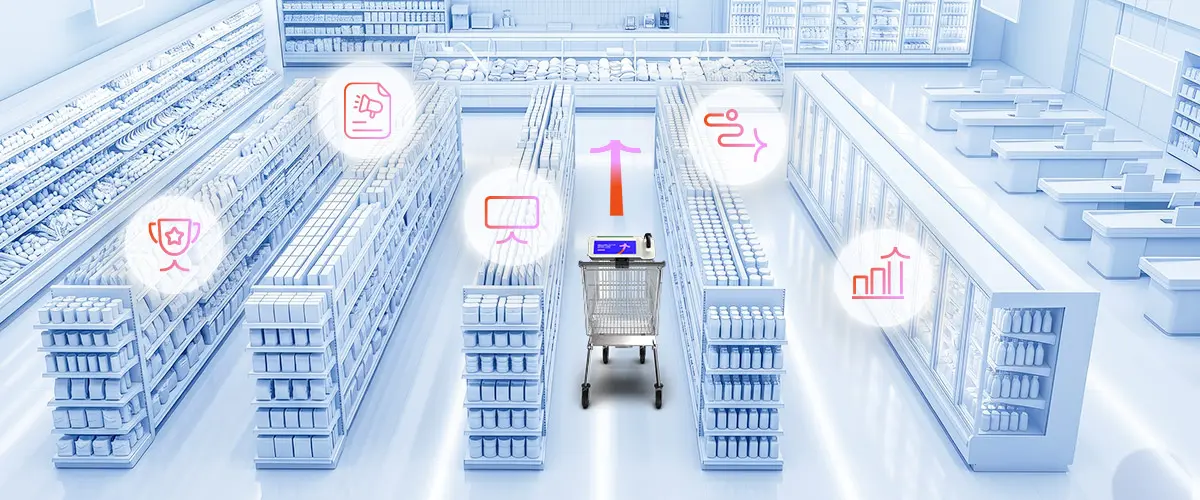
Through our retrofit model, retailers can upgrade existing fleets to create a seamless integration layer without the massive capital expenditure of a total fleet replacement. This platform connects the cart directly to the heart of the retail operation:
- Inventory & Pricing: Ensuring shoppers have real-time transparency and eliminating “price shock” at the register.
- Loyalty Systems: Recognizing the individual behind the handle and tailoring the experience based on their unique preferences and past behavior.
- Retail Media: Creating a new, addressable channel right at the fingertips of the consumer, turning the cart into a powerful point-of-decision marketing tool.
Closing the Attribution Loop
The broader shift discussed in the episode is about accountability. For too long, brands have accepted “impressions without attribution” as the cost of doing business in physical aisles.
When the cart becomes the channel, that gap closes. Brands no longer have to guess if an endcap display worked. They can now link an in-aisle digital prompt directly to a scan in the basket. This “closed-loop” data doesn’t just improve advertising; it strengthens the entire relationship between the retailer and the supplier.
The Bottom Line
The traditional checkout line was designed to end a transaction. The smart cart is designed to begin a relationship.
By turning the shopping trip into a measurable operating layer, we are moving the industry toward a future that is addressable and personal. We are helping retailers move from “guessing” what their customers want to “knowing” how to serve them better.
The future of retail is not just frictionless. It is addressable, personal, and profoundly more profitable.
Missed the episode? You can listen to the full discussion on the Retail Systems website and learn how Cust2mate is leading the in-store revolution.